
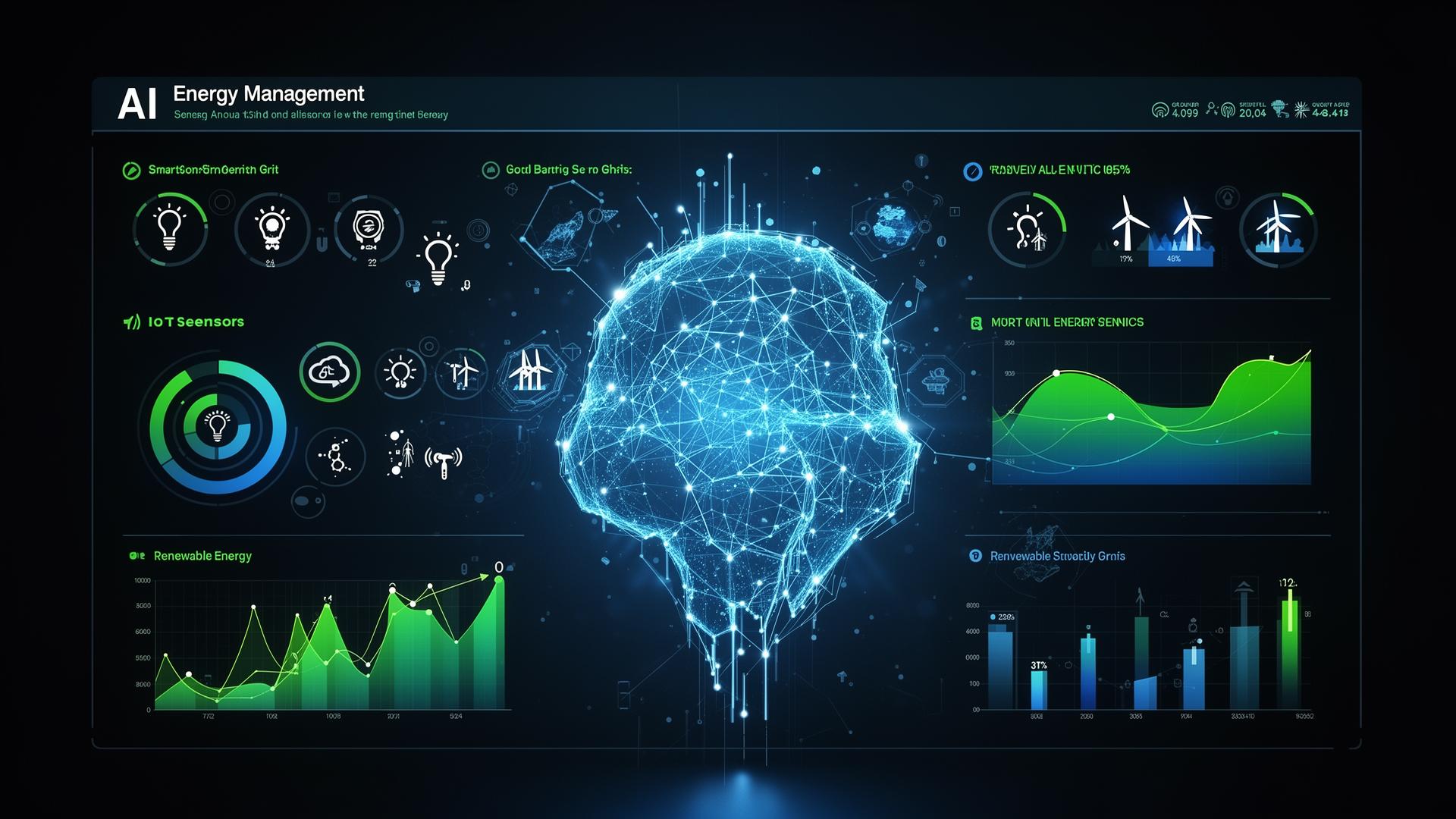
Why Is AI Inevitable in Energy Management?
Energy costs account for 20-40% of many businesses' operational expenses. Traditional energy management methods — manual meter reading, Excel-based tracking, reactive intervention — are no longer sufficient. As of 2026, AI-powered energy management systems deliver an average 15-30% cost savings for businesses.
So how exactly does AI transform energy management? In this guide, we examine the core components, implementation steps, and tangible returns of AI-based energy management.
AI-Powered Energy Forecasting
AI algorithms analyze historical consumption data, weather forecasts, and production plans to predict your future energy needs with high accuracy. This allows you to:
- Optimize energy purchasing costs during peak hours
- Plan energy storage during surplus production periods
- Detect anomalies and catch unexpected consumption spikes instantly
- Prepare proactively for seasonal changes
Modern forecasting models offer 85-95% accuracy compared to traditional methods, enabling much more precise energy budget planning.
Smart Automation and Real-Time Control
AI-based systems don't just forecast — they also make real-time decisions to optimize energy consumption:
- Automatic HVAC adjustment: Instant optimization based on building occupancy and outdoor temperature
- Lighting control: Dynamic adjustment based on natural light levels and area usage
- Production line scheduling: Shifting intensive operations to low-cost energy hours
- Renewable energy integration: Real-time balancing of solar and wind production
Implementation Steps: Where to Start?
Transitioning to AI-powered energy management should begin with a proper roadmap. Here is a proven 5-step approach:
- 1. Data Infrastructure: Set up real-time data collection with IoT sensors and smart meters
- 2. Current State Analysis: Analyze your energy consumption patterns with at least 6 months of data
- 3. Pilot Implementation: Test the AI model on a single building or production line
- 4. Scale Up: Roll out successful results across all operations
- 5. Continuous Optimization: Regularly retrain and improve the model
ROI: How Soon Does the Investment Pay Off?
The payback period for AI energy management systems generally ranges from 8-18 months. Typical returns include:
- Energy cost reduction of 15-30%
- Carbon emission decrease of 10-25%
- Equipment lifespan increase of 20%
- Maintenance cost savings of 15%
AI in energy management is no longer a luxury but a necessity for staying competitive. With the right tools and a strategic approach, you can both reduce costs and significantly contribute to your sustainability goals.