
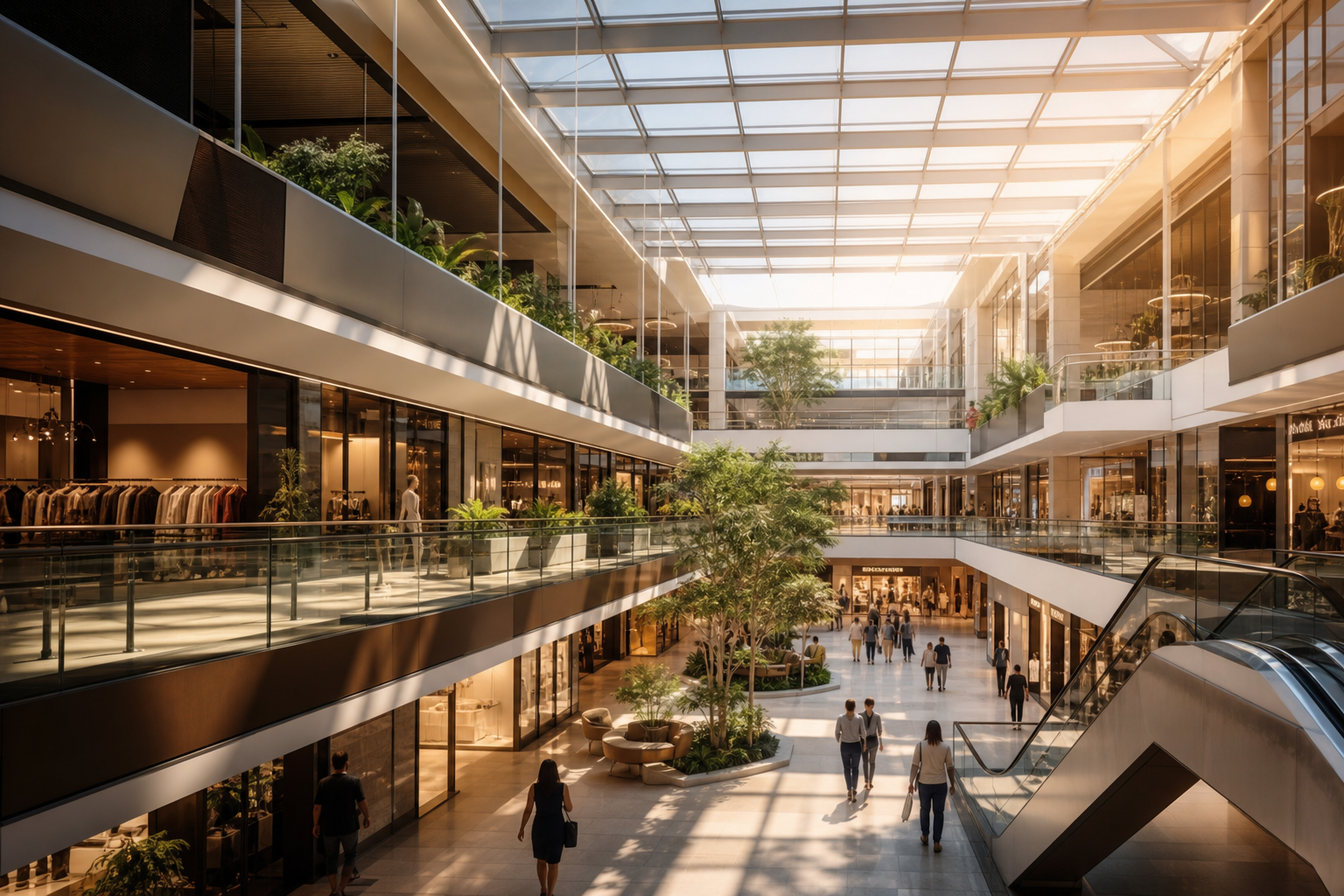
In the modern retail world, shopping malls are the epicenters of not only commerce but also massive energy consumption. Volatility in energy prices in Turkey, EPDK (Enerji Piyasası Düzenleme Kurumu - Energy Market Regulatory Authority) regulations, and global sustainability standards (CSRD, ETS) are forcing mall management to minimize operational expenses (OPEX). Energy typically accounts for between 30% and 50% of a mall's total expenditure items. At this point, energy efficiency is not just an environmental sensitivity but a direct profitability strategy. In this comprehensive guide, we will explore the technical and financial ways to reduce energy costs in shopping malls while examining the critical role of AI-powered platforms like etta in this process.
Analysis of the Mall Energy Consumption Profile
It is impossible to save energy without knowing where it is being spent in a mall. Energy consumption in a typical mall is generally distributed as follows:
- HVAC (Heating, Ventilation, and Air Conditioning): 45% - 60%
- Lighting: 20% - 30%
- Escalators and Elevators: 5% - 10%
- Other (Kitchens, sound systems, etc.): 5% - 10%
This distribution clearly shows that the greatest savings potential lies in HVAC systems. However, managing each sub-system in an integrated manner provides synergistic efficiency.
Optimization Strategies in HVAC Systems
HVAC systems consume the most energy while maintaining indoor air quality (IAQ). Inefficiency often stems from incorrect setpoints and operating principles that are not demand-oriented.
Variable Frequency Drives (VFD) and Automation
Installing VFDs on pump and fan motors allows motor speed to be adjusted according to need. The difference between a mall's low occupancy in the morning hours and the weekend rush can be turned into significant energy savings by dynamically adjusting fan speeds. The etta platform can dictate optimum operating hours to HVAC systems using weather data and visitor density forecasts.
Free Cooling
During transitional seasons when the outdoor air temperature is lower than the indoor requirement, it is possible to provide cooling using only outdoor air without running compressors. This method can reduce annual cooling costs by up to 15%.
Lighting Management and Smart Controls
While LED conversion has become a standard, using only LEDs is not enough to lower energy costs. Smart lighting systems should be supported by daylight harvesting and motion sensors.
- Parking Lot Lighting: Reducing lighting levels to 20% during hours with no movement and increasing to 100% only when a vehicle is detected is a major savings item.
- Facades and Signage: Instead of astronomical time relays, a centralized control system managed via etta can perform automatic optimization based on seasonal sunset times.
Financial Strategies: Net Metering and Demand Response
The energy market in Turkey, managed by EPİAŞ (Enerji Piyasaları İşletme A.Ş. - Energy Exchange Istanbul), offers various opportunities for malls. Particularly, unlicensed solar energy investments (GES - Güneş Enerji Santrali) made under article 5.1.h offer net metering opportunities, dramatically lowering energy costs.
Case Study: Mid-Sized Mall Analysis
Scenario: A mall with an annual consumption of 5,000,000 kWh installs a 1 MWp rooftop GES.
Results:
- Annual generation: ~1,400,000 kWh
- Savings Rate: 28%
- Payback Period: Approximately 3.5 - 4 years at current electricity unit prices.
- Additional Benefit: 650 tons of CO2 reduction annually in the carbon footprint.
Digital Energy Management with etta
The era of manual data collection and analysis is over. etta monitors all energy points in your mall in real-time. The AI engine compares current performance with historical data to detect anomalies instantly.
For example, noticing a drop in the COP (Coefficient of Performance) value of a chiller, etta sends an "efficiency loss alert" to the maintenance team, preventing major breakdowns and high bills. Additionally, by monitoring reactive power, it 100% prevents the mall from paying reactive power penalties.
Frequently Asked Questions (FAQ)
What should be the first step for energy savings in malls?
The first step is a comprehensive energy audit and the establishment of a digital monitoring infrastructure. Attempting improvements without measuring where consumption goes (sub-metering) is like shooting in the dark. You should separate the consumption of all departments with a platform like etta.
Does HVAC optimization negatively affect comfort?
On the contrary, smart optimization systems minimize temperature fluctuations. Since Demand Controlled Ventilation (DCV) determines the need for fresh air via CO2 sensors, indoor air quality always remains at the ideal level.
What does the ISO 50001 Energy Management System certification gain for malls?
ISO 50001 ensures the institutionalization of energy management. Furthermore, in Turkey, having this certificate is a major advantage for benefiting from incentives and VAP (Verimlilik Artırıcı Proje - Efficiency Increasing Project) supports.
What can be done besides GES to reduce energy costs?
Heat recovery systems, building envelope insulation, the use of regenerative drives in elevators, and most importantly, changing operational habits (energy culture) provide significant contributions.
Conclusion
Reducing energy costs in malls is a combination of technological investment and correct operational management. Every step taken, from HVAC to lighting, from GES net metering to digital monitoring, directly increases operational profitability. The AI-supported analyses offered by etta simplify this complex process, providing energy managers with a real-time decision support mechanism. Starting the green transition today will be your strongest shield against future carbon taxes and energy crises.